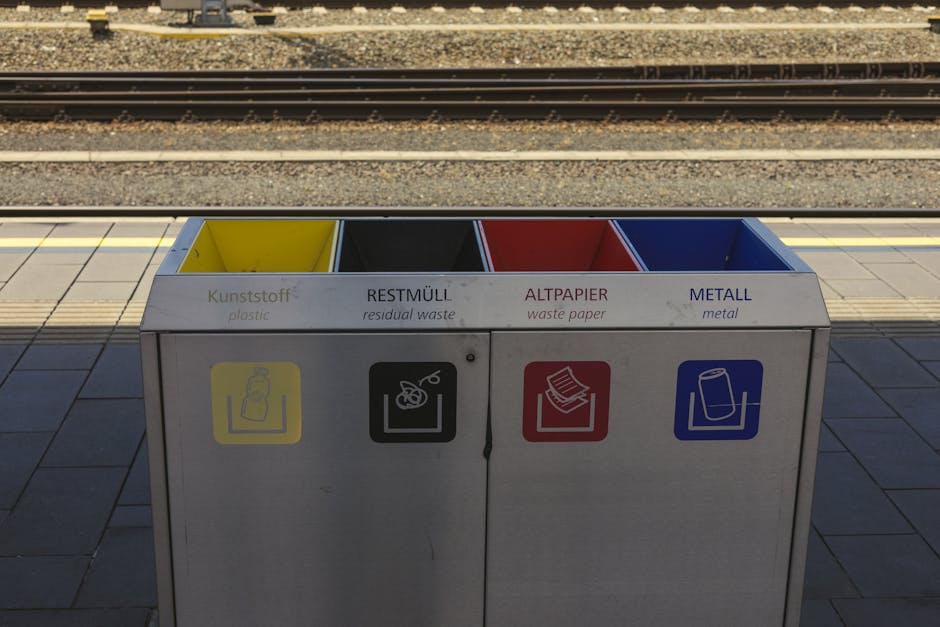
Surbiton Station rubbish removal guide for commuters
If you commute through Surbiton Station, you will know how quickly a small bit of rubbish becomes a bigger problem. A coffee cup left on the platform, a takeaway bag stuffed into a rucksack, a broken umbrella after a wet morning, or an old suitcase that has seen better days - it all adds up. This Surbiton Station rubbish removal guide for commuters is here to make the whole thing simpler, calmer, and a bit more practical.
Whether you are clearing out a flat before a move, dealing with office waste near the station, or just trying to avoid dragging unwanted junk across your commute, the goal is the same: get rid of waste quickly, responsibly, and without turning your day upside down. Truth be told, nobody wants to lug a battered chair onto the train at 7:45 a.m.
This guide walks through what rubbish removal means for commuters, how it works, what to avoid, and which options tend to make the most sense around a busy rail station environment. It also covers a few local realities that people often overlook, like timing, access, awkward bulky items, and the importance of using proper disposal routes for anything that is not plain household waste.
Why Surbiton Station rubbish removal guide for commuters Matters
Station-area rubbish is not just an eyesore. Around a place like Surbiton Station, waste can affect how smoothly people move, how welcoming the area feels, and how safe the environment is for everyone rushing to catch a train. A single abandoned bag or loose cardboard box can become a nuisance in a narrow walkway or busy entrance, especially during peak times.
For commuters, the issue is also personal. If you are heading to the office, managing a school run, or trying to get home without an extra chore on your shoulder, waste removal needs to be quick and realistic. You do not want to plan your whole evening around a pile of junk sitting by the door. And you really do not want to miss a train because you were trying to work out whether a broken monitor counts as general rubbish or something trickier.
There is another side to it as well: many items found in commuter homes, flats, or local offices are not suitable for ordinary bins. Bulky furniture, appliances, confidential paperwork, and mixed waste often need a proper collection or specialist handling. That is where a sensible rubbish removal plan saves time and stress.
Key takeaway: the best rubbish removal option is the one that fits commuter life - fast, tidy, reliable, and safe. If it is awkward to carry, risky to store, or too much for standard bins, it probably needs more than a casual throw-out.
How Surbiton Station rubbish removal guide for commuters Works
In practical terms, rubbish removal for commuters usually follows a simple pattern. You identify the waste, decide what needs to go, choose a collection method, and arrange a time that does not clash with your travel. That sounds obvious, but the details matter.
For example, a commuter who has upgraded a home office may end up with packaging, a desk chair, a printer, and cables. Another person might be leaving a rented flat near Surbiton and needs a mix of furniture, bags of general waste, and a fridge that has to go separately. Different waste types need different handling. No magic, just planning.
Most good rubbish removal arrangements are designed to be straightforward:
- You describe what needs removing.
- You get a sense of price, access, and timing.
- The waste is collected from your home, office, or storage location.
- It is then sorted for reuse, recycling, or disposal where appropriate.
If your items include anything awkward - such as a mattress, sofa, fridge, or potentially hazardous waste - the process becomes more specific. Some materials need separate handling, and some should never be mixed into general rubbish. That is especially important for commuters who have limited time and cannot afford mistakes.
For larger jobs, you may find it helpful to look at broader waste removal options, while a flat or move-out situation might be better suited to flat clearance. If the waste includes worn-out seating, the page on mattress and sofa disposal is also worth a look. Slightly boring? Maybe. Useful? Absolutely.
Key Benefits and Practical Advantages
Good rubbish removal near a commuter hub is not only about cleanliness. It creates time, reduces friction, and helps you avoid the classic last-minute panic where you realise the bulky item has been sitting in the hallway for two weeks. Let's face it, most people have enough to do already.
Here are the main practical benefits:
- Time saved: no multiple trips to disposal points when your day is already packed.
- Less disruption: one collection is easier than trying to squeeze waste management around train times.
- Safer spaces: fewer trip hazards in hallways, bin stores, and front entrances.
- Better presentation: useful for landlords, tenants, offices, and small businesses near the station.
- More responsible disposal: waste can be sorted properly rather than dumped in the wrong bin.
There is also a mental benefit that people underestimate. A cluttered home or office creates a low-level kind of drag. You notice it when you walk past the pile on the way to the station. You notice it again when you come home tired and the mess is still there. Clearing it removes that background noise.
If you are planning a larger clear-out, it may help to compare specific services such as home clearance, office clearance, or furniture disposal depending on the type of waste you are dealing with. The right choice is often the one that matches the shape of the mess.
Who This Is For and When It Makes Sense
This guide is for anyone whose daily routine passes through Surbiton Station and who needs waste removed without wasting half the day on it. That includes commuters, yes, but also people who live or work nearby and simply need a practical solution that fits around train times.
Typical situations include:
- Renters moving out of a flat and leaving behind mixed rubbish.
- Office staff clearing old equipment or packaging from a small workplace.
- Homeowners trying to deal with a garage, loft, or spare room full of clutter.
- Landlords preparing a property between tenancies.
- Commuters who have bought furniture or appliances and need the old items removed.
It makes especially good sense when you have one of the following pressures:
- limited time before or after the commute
- no car, or no easy way to transport bulky waste
- items that are too large for standard bins
- a deadline such as a move, inspection, handover, or office reset
- mixed waste that would take too long to separate and move yourself
In our experience, the most common turning point is the moment someone stands in the hallway and thinks, "Right, this is bigger than a bin bag job." That is usually the moment to stop improvising.
Step-by-Step Guidance
If you want the process to stay calm and efficient, use a simple sequence. Rushing often creates extra mess, and extra mess is exactly what commuters do not need.
- Sort the waste into broad groups. Keep general rubbish, reusable items, bulky furniture, electrical items, and anything hazardous separate if possible.
- Check what can be lifted safely. If an item is awkward, damaged, or too heavy for one person, do not gamble with your back.
- Make access easier. Clear stairs, hallways, and doorways. If you live in a block, check the lift or loading route before collection day.
- Decide the right service level. A few bags may suit a small collection, while a full room clear-out might need a broader service such as house clearance or garage clearance.
- Book a collection around your travel pattern. Early morning, lunchtime, or evening slots can reduce disruption if they are available.
- Confirm any special items in advance. Fridges, mattresses, and appliances often need specific handling. The same goes for confidential paper or waste that needs extra care.
- Keep the final handover simple. Once collected, check that the waste list matches what was agreed and that your space is left tidy.
A tiny but important detail: label anything you do not want taken. I know that sounds obvious, but in a rushed flat with bags by the door, things can blur together fast.
If you expect electrical or cooling appliances, it is sensible to review fridge and appliance removal. If you are handling paper records or old files, confidential shredding may be the more appropriate route. For work-related waste, business waste removal is often the better fit.
Expert Tips for Better Results
The most efficient rubbish removal jobs are usually the ones planned with ordinary commuter life in mind. That means thinking beyond the collection itself and looking at the little practical details.
- Bundle waste by type. It is easier to quote, lift, and dispose of when items are grouped sensibly.
- Take photos before booking. A quick visual record helps if you have bulky or mixed items. No need for perfection.
- Leave a clear path to the waste. A clear route saves time and avoids scuffs, knocks, and awkward pauses in narrow halls.
- Choose the collection window carefully. If your commute is busiest at 8:00 a.m., avoid a slot that creates stress right before the train.
- Ask about recycling first. Good operators should be able to explain how different materials are handled.
- Keep receipts or notes. If you are a landlord, business owner, or tenant, paperwork can be genuinely useful later.
One overlooked trick: do a five-minute sweep the night before. You will often find one extra bag, one old charger, one broken stool, and a pile of cables that was somehow hiding behind the radiator. Funny how that happens.
If sustainability matters to you, it is worth checking the provider's approach to sorting and reuse. The page on recycling and sustainability is a sensible place to start. For larger or heavier mixed loads, builders waste clearance can be relevant too, especially after renovations near a station flat or office unit.
Common Mistakes to Avoid
Most rubbish removal headaches come from avoidable mistakes, not bad luck. A little planning goes a long way.
- Leaving everything until the last minute. This creates panic and usually means the waste sits around longer than it should.
- Mixing hazardous or special items with general waste. That can cause handling problems and may be unsafe.
- Underestimating access issues. Narrow stairwells, parking restrictions, and lift delays can turn a simple job into a slow one.
- Assuming all bulky items are the same. Sofas, mattresses, appliances, and wood waste often need different treatment.
- Forgetting about paperwork or keys. It sounds trivial, but in the rush of the morning commute, people do forget.
- Choosing the cheapest option without checking what is included. A low headline price can become more expensive if it does not cover the actual work.
There is also a common emotional mistake: treating clutter as a future problem. Usually, future-you is already busy enough. Be kinder to them.
If you need a more complete empty-out of a property, loft clearance or furniture clearance may be better choices than trying to handle everything as loose rubbish.
Tools, Resources and Recommendations
You do not need a huge toolkit to manage rubbish removal well. A few basic things make a surprisingly big difference.
- Strong bags or boxes: useful for broken-down packaging, paper waste, and smaller items.
- Gloves: sensible for dusty loft items, old furniture, and anything with rough edges.
- Tape and labels: helpful when separating what stays from what goes.
- Phone camera: ideal for quick inventory photos and collection confirmation.
- Measuring tape: useful for doorways, lifts, and bulky furniture.
For planning purposes, you may also want to review a few service pages depending on the kind of waste involved. For example, mattress and sofa disposal is relevant for bulky soft furnishings, while hazardous waste disposal should be considered if the material is risky, smelly, or chemically sensitive. For day-to-day domestic waste, home clearance can be a practical route when the whole place needs attention, not just one item.
For readers who want to understand what can and cannot go into mixed waste, the page on what can go in a skip is a helpful reference point, even if you are not booking a skip itself. It gives a useful sense of where the boundaries usually sit.
Law, Compliance, Standards, or Best Practice
Waste handling in the UK is not something to shrug off. Even for commuters clearing a few items, there are basic duties around safe handling, proper disposal, and avoiding fly-tipping. You do not need to know every detail of waste law to act responsibly, but you should understand the principle: waste should go to the right place, with the right controls.
For households, the practical expectation is straightforward - do not leave waste in shared spaces, do not dump items in unauthorised areas, and do not put dangerous items into ordinary rubbish if they need specialist handling. For businesses, the standard is higher still. Records, duty of care, and clear separation of waste streams become more important, especially for offices close to a station where turnover can be quick.
Best practice usually includes:
- clear identification of waste types
- safe lifting and moving
- appropriate handling of electrical, bulky, or hazardous items
- use of responsible recycling and disposal routes
- avoiding blockages or nuisance in shared access areas
If you are booking a provider, it is sensible to look for clarity on safety, insurance, payment handling, and complaint routes. The site pages for insurance and safety, health and safety policy, payment and security, and complaints procedure are the sorts of things a careful customer would review before committing. Not glamorous reading, granted, but useful.
Options, Methods, or Comparison Table
Different rubbish removal methods suit different commuter scenarios. Choosing well saves time and avoids paying for more than you need.
| Option | Best for | Pros | Watch out for |
|---|---|---|---|
| Self-disposal | Very small amounts of waste | Low direct cost, flexible | Time-consuming, awkward without a car, not ideal for bulky items |
| Bag-and-carry clean-up | Loose household rubbish and packaging | Simple, quick to organise | Can become messy fast if waste is mixed or heavier than expected |
| Specialist collection | Furniture, appliances, mixed loads, or office items | Convenient, efficient, less lifting for you | Needs clear item descriptions and access information |
| Full clearance service | Moves, voids, refurbishments, or major decluttering | Best for larger jobs and tight deadlines | Overkill for a tiny amount of waste |
A lot of commuters start with self-disposal and then realise the item is awkward, heavy, or time-sensitive. That is usually the point where a more organised collection wins. If the waste comes from a workplace, office clearance may be more efficient than piecing it together item by item.
Case Study or Real-World Example
Picture a commuter living in a top-floor flat a short walk from Surbiton Station. They have just replaced a sofa, are getting rid of an old desk chair, and have several bags of packaging from a home office upgrade. There is also a small printer that no longer works. Nothing dramatic, but enough to become annoying very quickly.
At first, they try to store it all "until the weekend." The sofa blocks part of the hallway, the packaging slides around, and the printer ends up under a table, gathering dust. By Thursday morning, the whole thing feels twice as big. Pretty normal, to be fair.
The practical solution is to group the items, separate the electrical item, and arrange a collection that fits around the commute. The sofa and chair are handled as bulky furniture, the printer is treated separately, and the packaging is cleared with the rest. The flat feels breathable again. No chaos, no multiple van trips, no stress on a Monday morning.
That sort of situation is exactly why services like furniture disposal, fridge and appliance removal, and broader house clearance exist. The waste is rarely the real problem. The timing is.
Practical Checklist
Use this checklist before you book or move any rubbish.
- Have I sorted waste into clear categories?
- Do any items need special handling?
- Have I measured bulky items and checked access points?
- Is there a clear path from the waste to the exit?
- Have I chosen a collection time that fits my commute?
- Are any bags or boxes too heavy to lift safely?
- Have I set aside anything I want to keep?
- Do I understand what the service is taking away?
- Have I checked payment, safety, and sustainability information?
- Do I have a backup plan if access is tighter than expected?
If you can tick most of those boxes, you are in good shape. If not, take five minutes and tidy the plan before the waste starts taking over the space.
Get a free quote today and see how much you can save.
Conclusion
For commuters, rubbish removal should feel like a practical fix, not a weekend project. The smartest approach is simple: sort the waste, choose the right collection method, and keep the process aligned with your daily routine. That way, Surbiton Station stays part of your journey, not the place where your old furniture, packaging, or broken appliances start running your life.
The best outcomes usually come from clear decisions and a little bit of planning. Nothing flashy. Just fewer bins overflowing, fewer awkward lifts, and fewer moments spent thinking, "I really should deal with that."
And once the clutter is gone, the day tends to feel a little lighter. Funny how that works.
Frequently Asked Questions
What is the best rubbish removal option for commuters near Surbiton Station?
The best option depends on the amount and type of waste. Small, light rubbish may be manageable yourself, but bulky, mixed, or time-sensitive waste is usually better handled through a collection or clearance service.
Can I leave rubbish outside my flat or office before collection?
Only if it is safe, allowed, and clearly arranged. In shared buildings, leaving waste in communal areas can create access issues or complaints, so it is better to confirm the plan in advance.
How do I know if an item needs specialist disposal?
If it is electrical, hazardous, bulky, contaminated, or awkward to carry, it may need specialist handling. Common examples include fridges, mattresses, sofas, and items with chemicals or sharp components.
Is furniture removal worth it for just one item?
Yes, if the item is hard to move, impossible to transport on the train, or holding up a move-out or refit. One bulky item can be more of a problem than several bags of lighter rubbish.
What should I do with broken office equipment?
Separate it from general waste where possible and check whether it belongs in office clearance or a specialised electrical disposal route. If records are involved, confidential shredding may also be useful.
How far in advance should I book rubbish removal?
As soon as you know you need it, especially if you are working around commuting hours, a tenancy deadline, or a property handover. The more time you leave, the easier it is to choose a convenient slot.
Can rubbish removal help with a move-out from a station-area flat?
Absolutely. Move-outs often create mixed waste: furniture, packaging, old storage items, and bags of general rubbish. A flat clearance service is often a good fit for that sort of job.
What happens to the waste after collection?
Good practice is to sort items for reuse, recycling, or responsible disposal where suitable. The exact route depends on the material, condition, and any special handling required.
Are there risks if I try to move heavy waste myself?
Yes. The main risks are back strain, trips, damage to walls or floors, and delays if the item does not fit through doors or stairwells. If it feels awkward, it usually is awkward.
What if I only have a few bags of rubbish?
Then a simple collection may be enough. The key is matching the method to the actual volume, not assuming every job needs a big clearance.
Should I check a company's policies before booking?
It is a good idea. Look at safety, insurance, payment security, sustainability, and complaints information so you know what to expect before anything is collected.
Can a rubbish removal service handle a whole room or property clear-out?
Yes, and that is often the most efficient way to deal with a larger job. For whole-home, loft, garage, or office jobs, a broader clearance service is usually better than trying to manage waste piecemeal.
If you are ready to clear out the clutter and make your commute simpler, the next step is straightforward: choose the right service, book a convenient time, and let the mess disappear before it starts annoying you any longer. Small win, but a good one.